.png)

The Shift From Fixing to Supporting
.png/v1/fill/w_320,h_320/file.jpg)
For a long time, I thought the goal was to find the thing that would finally fix everything.

The product that would stop the discomfort completely. The ingredient that would make the body cooperate again. The routine that would suddenly make exhaustion easier to manage.
A lot of people are looking for that.
When you are sore all the time, tired all the time, uncomfortable all the time, it makes sense to want something that feels immediate and powerful. Most people are not looking for luxury. They are looking for relief that helps them get through everyday life a little easier.
But eventually I realized most bodies do not work in dramatic before-and-after moments.
Most people are carrying layers of stress and physical strain that build over time. Long days, poor sleep, tight muscles, hormonal shifts, overstimulation, physical demands, chronic illness, recovery from overdoing it, nervous systems that never fully settle down. It all stacks together. And when you are in the middle of it, the last thing you need is a product that asks more of you than you have to give.
That realization changed how I approached body care.
Why the "Fix It" Mindset Falls Apart
A lot of products are marketed like they should completely change your body overnight. Everything is framed like the answer, built to work fast, and marketed around a promise big enough to grab attention.
But real life usually is not that simple.
What I noticed over time was that the products that actually stayed part of my routine were rarely the most aggressive or intense ones. They were the products I could realistically keep using. The lotion that absorbed well enough that I did not avoid it. The formula that fit naturally into my evening instead of feeling like another exhausting step. The products that supported my body steadily instead of ending up shoved in the back of a cabinet after two uses.
That changed my perspective.
I stopped asking, "Will this fix everything?" I started asking, "Will this actually support someone consistently in real life?"
What Living With a Chronic Condition Taught Me
Living with a chronic condition changed the way I see this more than anything else.
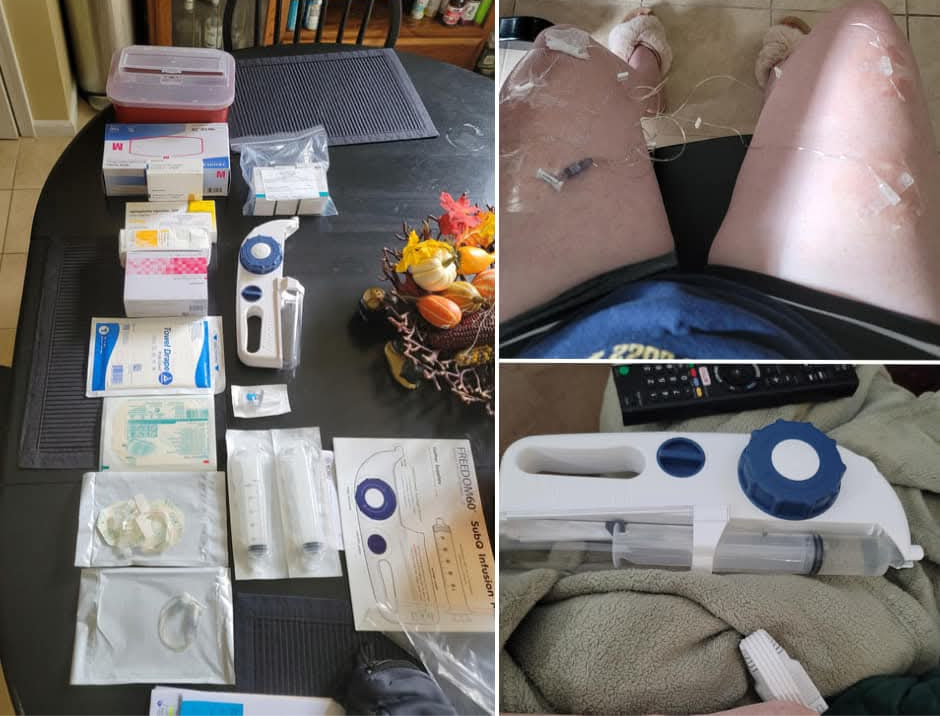
My body does not stay in its lane. When one thing is off, everything follows. Muscle tension that lingers long after activity ends, joint inflammation that never fully resolves, a nervous system that stays alert even when there is nothing left to respond to. Some days I could function. Some days basic things felt like too much. I had to learn fairly quickly that pushing through or ignoring it did not fix anything. I had to learn to work with my body instead of constantly trying to override it.
That meant paying close attention to what I could actually sustain. Not what I should be doing in theory. What I could realistically do on a hard Tuesday when my energy was already gone.
The things that helped most were almost always the things that fit into my life without adding friction.
Products that felt good to use. Routines simple enough to continue during the weeks when everything else was competing for what I had left. If something felt like a task, I eventually stopped doing it. If something felt manageable, I kept reaching for it. That pattern repeated itself enough times that I could not ignore it anymore.
Why I Started Formulating for Compromised Skin
The other turning point came when my mother was going through radiation treatment.

Radiation left her skin fragile, burned, and reactive. Products that had worked for her before suddenly made things worse. The ones marketed for sensitive skin were often not gentle enough in practice. Others did not absorb well or left her skin feeling worse after use. Watching someone you love navigate that level of discomfort, while already carrying everything else that comes with a cancer diagnosis, changes how carefully you approach your work.
I was not thinking about building a product line at that point. I was thinking about how to support her skin through something genuinely difficult, and how to make something she could use comfortably every day without it becoming another source of frustration.
Later, a few other friends went through radiation as well, and I saw the same pattern repeat. The skin becomes compromised in ways that most conventional products are not designed to address. What those situations needed was not something intense or transformative. What they needed was something gentle, stable, and easy to use consistently throughout treatment and recovery.
That experience reinforced something I had already started to believe from managing my own health: the most meaningful thing a product can do is support someone reliably during a hard stretch, not impress them once under ideal conditions.
Supportive Care Is Still Meaningful Care
I think supportive care gets dismissed too easily because it sounds less dramatic.
But support is often what helps people function day after day. It is the magnesium lotion rubbed into tight shoulders after hours at a desk. It is taking care of dry, stressed skin before it becomes irritated and uncomfortable. It is supporting sore legs before the discomfort builds into a miserable night. It is building routines simple enough to continue even during difficult weeks.
None of that is flashy. But realistic support matters more to me than dramatic marketing ever will.
You learn very quickly, when you are managing your own body through something hard or helping someone you love do the same, that the things that help most are usually the things you can continue consistently. Products that feel good to use. Products that fit into your life without creating more friction. Products you can still reach for when your energy is already gone.
That became the standard I wanted every Juneberry Apothecary formula to meet.
How This Changed the Way I Formulate

Once I stopped chasing big promises, I started paying attention to completely different things during formulation. How does this feel after repeated use? Does it absorb well enough for daily life? Will someone actually want to keep using it? Does the formula support the skin barrier over time? Does this fit into a real routine without adding friction?
Those questions matter more to me than trends or hype. I care far more about whether a product genuinely holds up in daily use than whether it sounds impressive online. That is why Juneberry Apothecary products are built around practical support, thoughtful formulation, and repeatable routines. Not complicated systems. Not unrealistic promises. Not products designed to feel exciting once and frustrating after that.
Real body care for real life.
What Steady Support Looks Like
Most supportive care is quiet. It looks like applying magnesium lotion before bed because your calves and feet feel heavy after a long day. It looks like reaching for something after physical work before the soreness fully settles in. It looks like maintaining your skin barrier consistently instead of trying to recover it after it is already stressed. It looks like choosing routines simple enough to stick with during the weeks when you are running low on everything.
It is usually simple. And simple is often what people can actually sustain.
That kind of care does not always perform well in marketing because it is not dramatic enough. But it is the kind of care people keep coming back to because it is actually manageable to maintain. That matters more to me than trends ever will.
What Juneberry Apothecary Is Built Around
Every Juneberry Apothecary product comes back to the same core philosophy: steady support, practical use, thoughtful ingredients, and real-world function.

I do not believe body care has to promise transformation to matter. Sometimes helping someone feel a little less tense, a little more comfortable, or a little more supported at the end of a long day is meaningful on its own. Sometimes supporting someone through a hard stretch of treatment, recovery, or chronic illness is enough. That belief is built into every formula I make.
Body care should work with everyday life, not against it.
Herbal solutions for everyday living.
Rooted in care. Formulated for real life.
FAQs
Why do products that promise fast results often stop working?
Because they are usually built around a claim rather than daily usability. A product designed to impress on first use is not always built to absorb well, feel comfortable, or hold up after weeks of consistent application. If something stings, sits heavily, or becomes something you avoid, it is not going to help you over time regardless of what the ingredients list says.
What does "supportive care" actually mean?
It means products and routines designed to help your body function more comfortably on an ongoing basis rather than products that promise to fix a problem once. Supportive care works steadily over time. It is the magnesium lotion you use before your legs get bad, the toner you apply before your skin gets reactive, the routine you maintain during difficult weeks because it is simple enough to continue.
Why does consistency matter more than intensity?
Because what you actually use regularly outperforms what you use occasionally, no matter how strong the occasional product is. A formula that feels good, absorbs well, and fits into your routine without friction will always do more for you over time than something you reach for twice and set aside.
What makes a product actually work for compromised or sensitive skin?
Gentleness, stability, and ease of use. Compromised skin, whether from radiation treatment, chronic illness, or ongoing stress, does not need more intensity. It needs something that supports the skin barrier consistently without causing additional irritation. That means formulas built around absorption, skin feel, and long-term use rather than short-term impressiveness.
How do I know if something is worth using long-term?
Pay attention after two or three weeks, not just the first application. If you are still reaching for it without thinking about it, it is working. If you have to remind yourself to use it, talk yourself into it, or work around something about it you do not like, it is probably not the right fit for your routine.
Why is magnesium lotion easier to use consistently than magnesium spray?
Mostly because of how it feels on the skin. Magnesium spray, especially applied after a shower or to freshly washed skin, can sting or feel intensely uncomfortable for a lot of people. That alone is enough to make someone stop using it. A well-formulated magnesium lotion absorbs more comfortably, fits naturally into a body care routine, and does not create a reason to avoid it. If something is uncomfortable to use, you will not use it every day. And daily use is where the real benefit comes from.
What should I look for in a body care product if I have a chronic condition?
Ease of use comes first. When you are managing a chronic condition, your energy is already spoken for. A product that requires extra steps, feels uncomfortable on the skin, or becomes something you have to think about will eventually get skipped. Look for formulas that absorb well, feel comfortable from the first use, and do not require ideal conditions to apply. The best product for a chronic condition is one you can realistically use on your worst days, not just your best ones.
Is natural body care actually effective, or is it mostly marketing?
It depends entirely on the formulation. Natural or botanical ingredients can be genuinely functional when they are selected with purpose, prepared correctly, and built into a stable formula. The problem is that a lot of natural products are marketed around an aesthetic rather than formulated around a function. What matters is whether the ingredients have a reason to be there, whether the extraction or preparation method preserves their useful properties, and whether the finished product actually performs with repeated use. Those questions apply to any product, natural or not.
Why does skin feel worse before it feels better with some products?
Usually because the product is not the right fit for that skin type, the formula is too heavy or too stripping, or the skin barrier is already compromised and reacting to something in the formula. A product that consistently irritates or destabilizes your skin is not something to push through. Skin that is adjusting to a well-matched product typically just settles in quietly over a few uses. If something is causing visible irritation, dryness, or discomfort after several uses, that is worth paying attention to.
How do I build a body care routine I can actually stick with?
Keep it simple enough to do when you are tired. If your routine only works when you have extra time and energy, it will not hold up during the weeks that matter most. Start with one or two products that address your most consistent needs and that feel genuinely easy to use. Once those become a habit, adding anything else is much easier. The goal is a routine that fits around your life, not one you have to rearrange your life to maintain.
What is the difference between fixing a problem and supporting the body?
Fixing implies the problem goes away. Supporting means helping the body function more comfortably on an ongoing basis. For a lot of common discomforts, including muscle tension, dry or stressed skin, poor sleep, and chronic soreness, the goal is not to eliminate the issue permanently with a single product. The goal is steady, reliable support that makes daily life more manageable. That is a more honest framing, and it is the one Juneberry Apothecary products are built around.


Comments